


The Eriskay Pony PDF Print E-mail

Image 

Breed Description

Summary Breed Standard

Character

History & Origins

Eriskays at Work and Play 

Breed Description.

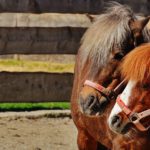
The Eriskay Pony stands 124-138cm (12.0-13.2 hands) high.

The predominant colour is grey, with the occasional black or bay.

Though foals are often born brown or black they turn grey with maturity.

In winter a dense waterproof coat enables them to live out in the harshest conditions.

Their legs are fine, with only a small tuft of hair at the fetlock.

Their temperament is excellent and their enjoyment of human company makes them ideal back door ponies, as they were on the crofts

Eriskay ponies are very distinctive in that they are usually born black or bay and usually turn grey as they mature, a few individuals have remained black or bay into adulthood, but no other colours occur.

Back to top

Summary Breed Standard


Characteristic

Standard

Additional Judges Guidance Notes

Temperament.

Eriskay Ponies should be placid and amenable with no signs of viciousness or aggression.

Withers Height

12.0-13.2 hands high.

Body

Generous in all dimensions, relative to the height of the legs.

There should be a long rib cage and very short loin ensure strength to the back. Croup to buttocks gently sloping to tail.

Chest

Very large, deep, well sprung: ideally having a gentle but pronounced slope from the spine downwards towards the full width of the ribcage.

The chest should not be too broad.

Head

Large, wide and deep.

There should be good bold eyes set well apart. Wide forehead with well set ears in proportion. There should be a deep jaw and tapering muzzle.

Teeth

Teeth should meet evenly.

Neck

Strong and well muscled.

The neck set in high and carried proudly, showing a good length of rein.

Dock

Low, but not excessively so; gentle curve from the croup to the pin bone with the dock situated in the middle third of this curve; the tail should be well set in.

Fine low set dock and tail well carried.

Legs

Fine, with only a tuft of feather behind the fetlock.

Legs strong but not thick, having plenty of clean flat bone and just a little fine feather.

Shoulders

Well muscled and strong..

A good strong shoulder with the neck set in high and carried proudly, showing a good length of rein.

Pasterns

Relatively short and sloping.

Feet

Small and neat with hard horn; somewhat upright with rather flat soles.

Hooves should be hard and sound, well rounded and a natural extension of a well proportioned leg.

Hair

Forelock, mane and tail well developed and generous in quantity. Caudal fringe should always be discernible.

Mane and tail not coarse and heavy. Fine silky coat in summer. Dense but not unduly heavy coat in winter.

Colour

The dominant colour pattern is that foals are born black and turn grey as they age. Some do not turn grey and other colours occur. In dark coloured animals there should be a light coloured muzzle and a light coloured ring round the eye; there should not be a pronounced eel stripe.

There are no colours that are unacceptable.

Action

Legs are not lifted high and steps are short.

Smooth and free without exaggeration. Good rhythm and cadence. Walk and trot straight and true with good flexion of the hocks and freedom of the shoulders.


 Back to top

Character

Active, honest and workmanlike with excellent temperament. Sensible and intelligent with a pronounced level of confidence and affinity with humans. 

Back to top

History & Origins.

Modern Eriskay ponies are the last surviving remnants of the original native ponies of the Western Isles of Scotland. They have ancient Celtic and Norse connections and Eriskays have been proven by measurement to be of similar proportions to those found on ancient Pictish stones throughout the North and West of Scotland.

Until the middle of the 19th Century ponies of the “Western Isles type” were found throughout the islands and used as crofters ponies, undertaking everyday tasks such as bringing home peat and seaweed in basket work creels slung over their backs, pulling carts, harrowing and even taking the children to school.

In some ways the ponies were subject to “human” in addition to “natural” selection. The ponies had evolved to survive on meagre food supplies, with coats, ears and tails well adapted to coping with a harsh, wet and windy climate. Eriskays were then subject to the forces of living in a society where women and children did most of the work while the men were at sea. Poor temperaments could not be tolerated. Only those ponies happy to live in close proximity with their handlers, those willing to be trained and work hard, were retained. Unsuitable specimens were culled. Over the centuries, the Eriskay ponies evolved into the hardy, versatile, people friendly characters we recognise today.

On many of the islands increasing mobility and farming pressures led to larger ponies becoming fashionable. Norwegian Fjords, Arabs, Clydesdales and others were introduced to “improve” the native stocks and produce larger, stronger animals. On the remote island of Eriskay in the Western Isles, however, due to difficulties with access, other breeds were not introduced, leaving a stock of pure bred ponies which, due to mechnisation, had declined to around 20 animals by the early 1970s.

It was at this time that a dedicated group of people comprising a local priest, doctor, vet, scientist and crofters, got together and decided to save the ponies whose numbers were dangerously low. Through their hard work and the establishment of breeding groups throughout the British Isles, numbers have risen steadily and now there are around 420 Eriskays in the world.

The Eriskay Pony is classed as critical by the Rare Breeds Survival Trust with whom the Eriskay Pony Society works closely to ensure the long term survival of the breed.

Back to top

Eriskays at Work and Play.

Image

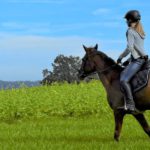
Today, Eriskay Ponies can be seen competing in all spheres of equestrianism. Members of the Eriskay Pony Society regularly take part in activities such as hunting, dressage, show jumping, show hunter, cross country, pony club eventing, team games, western riding and driving. Although they stand between 12.0 and 13.2hh they are strong for their size, have terrific stamina and can carry a light adult with ease. They also make excellent driving ponies, Lesley Cox from Cheshire has had tremendous success with her tandem driving ponies, competing at FEI level and winning regularly.

Other Eriskays make excellent family ponies, with their human friendly characteristics coming to the fore playing football in the garden with the kids, or working with special needs children as RDA ponies.

Back to top 


© 2010 Eriskay Pony Society